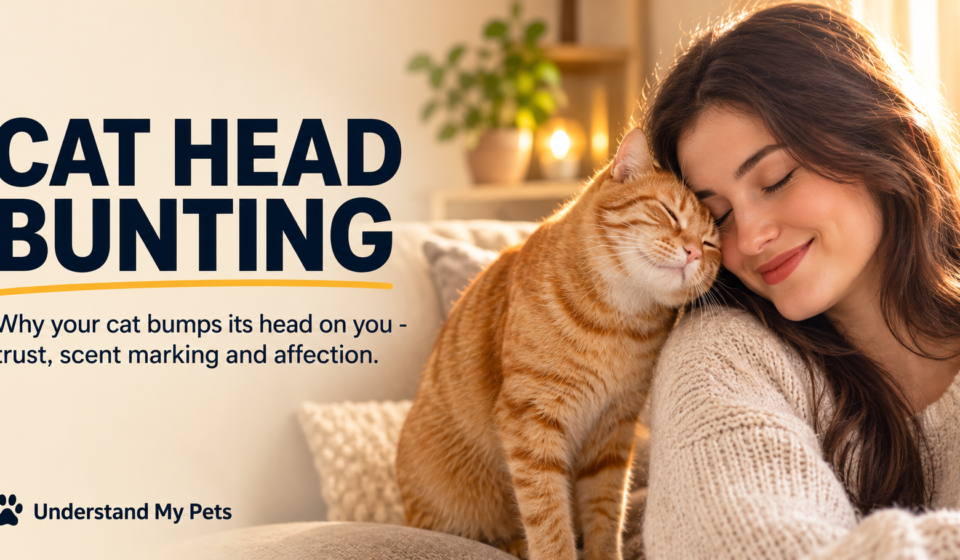

Has your cat head bunting ever walked up to you and gently bumped its head against your cheek, hand, or knee?
If yes, congratulations that little head bump is one of the biggest compliments a cat can give.
This behavior is called cat head bunting (also known as head bumping). Typically, it is a mix of affection, trust, and scent marking.
Additionally, this guide explains head bunting, why cats do it, and how to distinguish it from head pressing.
What Is Cat Head Bunting? (The Quick Answer)
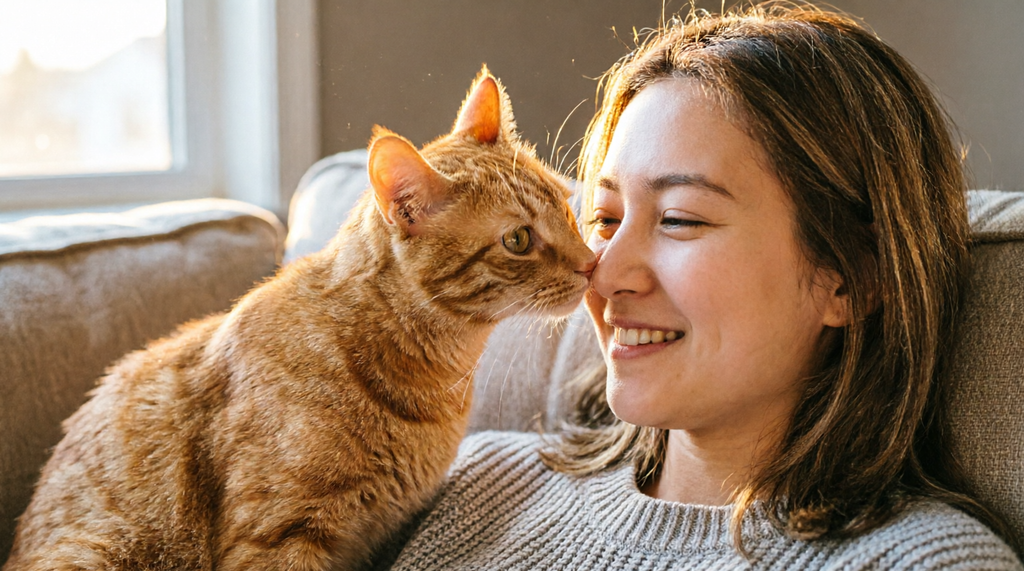
Cat head bunting is when a cat gently presses or rubs its head, cheek, or chin against a person, another pet, or an object.
It is a normal, friendly social behavior. Cats have scent glands on their head, and when they bunt, they leave their scent on you.
In cat language, that roughly means: “You are part of my group. You are safe. You are mine.”
Why Do Cats Head Bunt? 5 Common Reasons
1. Scent Marking: You Are “Theirs”
Cats have scent glands on their cheeks, chin, temples, base of the ears, and around the lips. When your cat rubs these areas on you, it deposits pheromones — chemical messages other cats can smell.
By marking you, your cat mixes its scent with yours. This creates a familiar “group scent” that makes your cat feel secure at home.
2. Trust and Affection
Cats usually bunt only the people and animals they feel safe with. A cat that head bunts you is showing confidence and comfort in your presence.
If your cat also gives you a [Internal Link: cat slow blink] after a head bump, that is another strong trust signal.
3. Greeting You (and Re-Marking You)
Many cats bunt their owners right after they come home. Why? Because you came back smelling like the outside world — other people, streets, and offices.
Your cat is saying hello and quickly re-marking you so you smell like “home” again.
4. Attention Seeking
Cats learn fast. If head bunting usually earns them pets, kind words, or treats, they will repeat it. In this case, bunting is a polite way of saying, “Hey, look at me.”
5. Comfort and Familiarity
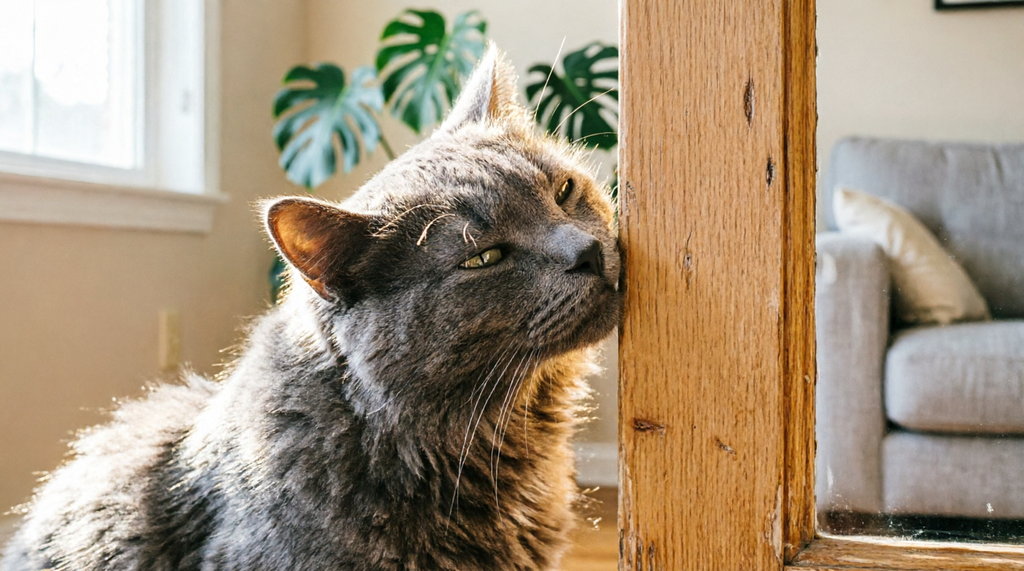
Cats also bunt furniture, door frames, and corners. This makes the home smell familiar and safe. A well-“marked” home is a relaxed home.
Where Are a Cat’s Scent Glands?
Understanding scent glands makes bunting make sense. The main facial scent glands are located on:
- The cheeks
- The chin
- The temples and forehead
- The base of the ears
- Around the lips
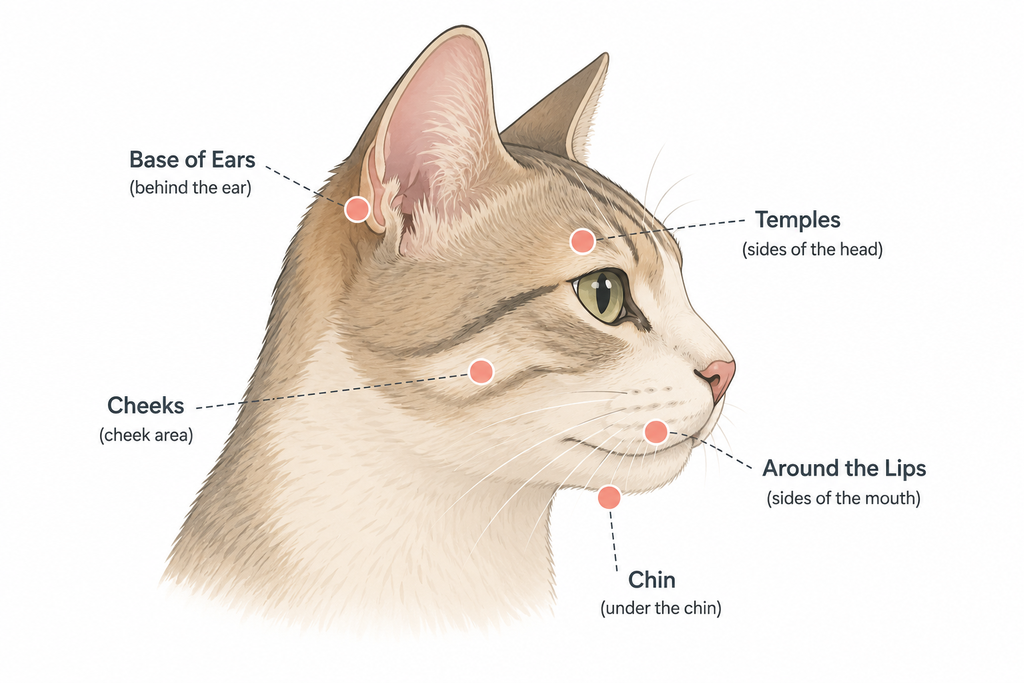
That is exactly why cats rub those spots on you and on objects. When your cat “bunts,” it is not being clumsy — it is communicating.
Head Bunting vs. Head Pressing: Know the Difference (Important)
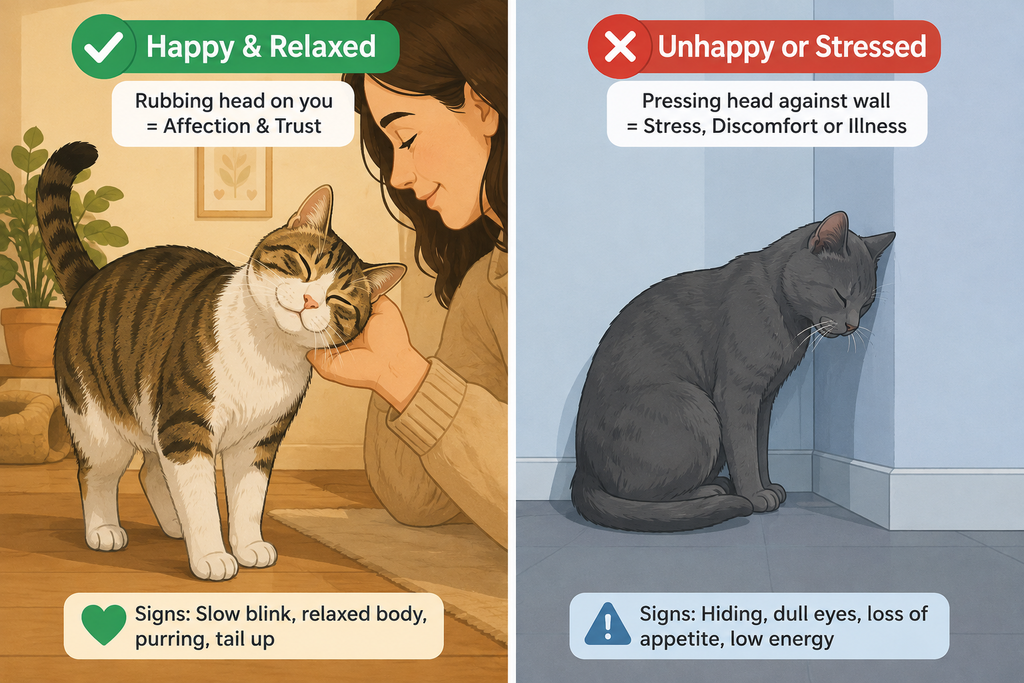
This is the part every cat owner must know.
Head bunting is normal. The cat is relaxed, rubs or bumps against people or objects, and behaves normally afterwards.
Head pressing is different — and it is a medical warning sign. Head pressing is when a cat persistently presses its head against a wall, corner, or hard surface, often without rubbing, and may look dull or disoriented.
Head pressing can be a sign of neurological problems, toxicity, or metabolic disease. If you see it, contact a vet the same day.
See a vet urgently if head pressing comes with:
- Disorientation or walking in circles
- Changes in vocalization
- Loss of appetite
- Seizures or unusual drowsiness
⚠️ Vet Disclaimer: This article is for informational purposes only and is not veterinary advice. If your cat shows head pressing or sudden behavior changes, contact a licensed veterinarian immediately.
How Should You Respond When Your Cat Head Bunts?
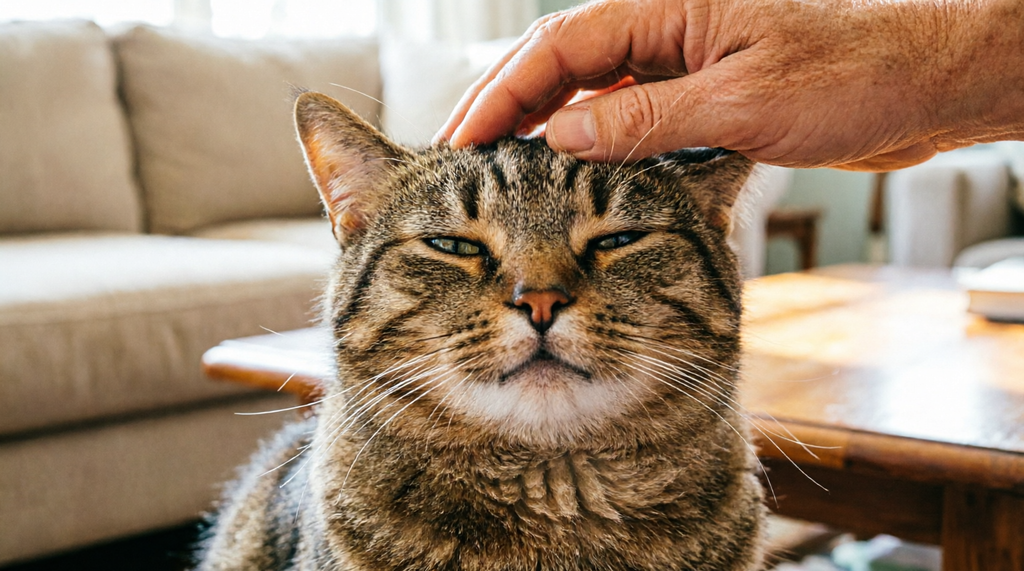
- Accept it calmly. Gently pet the head, cheeks, or chin the spots cats love.
- Do not punish it. Bunting is friendly communication; punishment can damage trust.
- Read the body language. If the tail starts [Internal Link: cat tail flicking] or the ears go [Internal Link: cat ear positions] flat, give your cat space.
- Let the cat leave. If your cat walks away after bunting, that is fine. Cats prefer short, positive contact.
Why Does My Cat Head Bunt Me but Not Other People?
Simple: bond and scent familiarity.
Cats bunt the people they trust most. If your cat bunts you but not your partner or guests, it does not mean dislike it just means you are the “home base” scent.
Also, not all cats bunt. Personality, early socialization, and individual differences matter. A cat that never bunts can still love you deeply watch for other trust signs like [Internal Link: cat showing belly], [Internal Link: cat slow blink], or following you from room to room.
When Might Head Bunting Need a Vet Check?
Normal bunting is nothing to worry about. But see a vet if:
- The rubbing suddenly becomes excessive or frantic (possible skin irritation, allergy, or pain)
- It is paired with [Internal Link: why does my cat hide under the bed], appetite loss, or vocalization changes
- You see any head pressing behavior
Sudden behavior changes always deserve a professional check.
Cat Head Bunting: FAQ
Is cat head bunting a sign of love?
Yes, in most cases. It is a mix of trust, affection, and scent bonding. Your cat is marking you as a safe, familiar part of its world.
Why does my cat head bunt me when I come home?
You return with “outside” smells. Bunting is a greeting and a way to re-mark you with a familiar scent.
Should I head bunt my cat back?
You do not need to. Gentle petting on the head and cheeks is a perfect response. Some owners lightly touch foreheads with their cat that is fine if the cat stays relaxed.
Do all cats head bunt?
No. Some cats bunt a lot, some rarely. Both are normal. Judge your cat’s bond by the full picture of body language, not one single behavior.
Is head bunting the same as head pressing?
No. Bunting is rubbing against people or objects and is normal. Pressing the head against walls or corners persistently is a medical red flag see a vet.
Why does my cat bunt the dog too?
If the cat feels safe with the dog, bunting includes the dog in the “group scent.” It is a good sign of a relaxed multi-pet home.
Final Thoughts
Cat head bunting is one of the clearest signs that your cat feels safe with you. It is scent marking, greeting, and affection rolled into one gentle head bump.
Enjoy it, respond with gentle pets, and remember the difference between normal bunting and head pressing.