
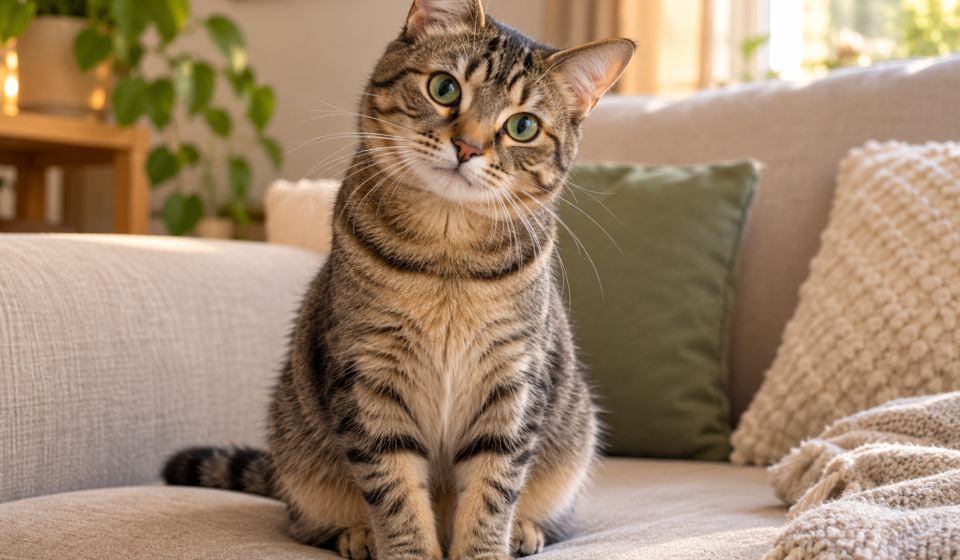

If you live with a cat, you’ve probably caught yourself staring at them and thinking: what on earth are you doing?
One minute they’re a purring loaf on your lap. The next, they’re sprinting down the hallway at 3 a.m. like something invisible insulted them. Then they rub their cheek on your coffee mug, sit in a cardboard box half their size, and knock your pen off the table while holding eye contact.
Here’s the thing most cat owners slowly discover: none of it is random.
Cat behavior is communication. Every knead, chirp, stare, and dramatic flop carries information about how your cat feels, what they want, and how they read the room (and you). Cats evolved as solitary hunters and territorial animals, so they never developed the loud, obvious social signals dogs use. Instead, they communicate in whispers tail angles, ear rotations, scent marks, and tiny facial changes.
Once you learn to read those whispers, something shifts. Your cat stops being “moody” or “weird” and starts being surprisingly honest. You’ll spot stress earlier, build trust faster, and honestly, enjoy the comedy more.
This guide decodes the behaviors you actually see at home: the sounds, the tail and ear signals, the scent rituals, the daily habits, the sleep schedule, the litter box report card, and the subtle stress signs worth taking seriously.
Let’s step inside the secret world.
First, a Quick Note About the Cat Brain
Before decoding anything, you need one frame of reference: your cat is not a small dog, and definitely not a small human.
Cats evolved as solo hunters of small prey. That single fact explains half of their “weird” habits. Solo hunters don’t need pack signals. They need stealth, patience, explosive bursts of energy, and total control of a safe territory. That’s why cats:
- Sleep 12–16 hours and hunt (or play) in short, intense bursts
- Are most active at dawn and dusk (crepuscular, not nocturnal)
- Mark and guard territory with scent more than sound
- Hide pain and weakness as a survival instinct
- Prefer predictable routines and familiar smells
Add their double role as both predator and prey in the wild, and you get an animal that is always scanning for threats, even in a safe apartment. A cat that suddenly stops grooming, hides for a day, or quits the litter box isn’t being dramatic. It’s following an ancient survival script that says: something is wrong — go quiet.
Keep that script in mind while you read. Almost every behavior below makes sense once you remember: your cat is a tiny predator who is also, sometimes, somebody else’s prey.
The Vocal Decoder: What Every Cat Sound Means
Cats are mostly silent with each other. Most of their “vocabulary” is reserved for one species in particular: us.
The Meow: Made for Humans
Adult cats rarely meow at other cats. Kittens meow at their mothers, and cats basically keep that kitten channel open with their humans. So when your cat meows at you, they’re talking to you.
The meaning lives in the pattern:
- Short, soft meow: “hi” / “notice me”
- Repeated mid-pitch meows: excitement or greeting
- Long, drawn-out meow: a demand — food, door, litter duty
- Low, grumbly meow: complaint or protest
- Loud, urgent yowl-meow: something feels wrong; check on them
A sudden change in meow volume or frequency is information. A talkative cat going silent, or a quiet cat yowling all day, both deserve a closer look (and often a vet check).
The Purr: Not Always Happiness
The purr is the most misunderstood cat sound. Yes, cats purr when content. But they also purr when scared, in pain, or at the vet — researchers believe purring can self-soothe and may even support healing, since purr frequencies sit in a range linked to tissue repair.
Read the body, not the sound. Purr + loose body + slow blink + kneading = happy. Purr + tucked posture + flattened ears + hiding = “I’m stressed, please comfort me.”
Chirps and Chatter: The Window Sounds
That tiny trilling “brrrp” is usually excitement and greeting — cats chirp at birds, at you when you come home, at the food cupboard. Chattering (the clicking jaw sound at birds through a window) is tied to hunting arousal and, probably, frustration at unreachable prey.
The Yowl: Listen Carefully
A yowl is a long, loud, emotional vocal. It can mean territorial stress (a strange cat outside), mating calls in unneutered cats, disorientation in older cats (especially at night), or a demand that has escalated past the meow stage. New, repetitive yowling — especially in senior cats — earns a vet visit.
Hisses and Growls: The Clear Boundary
A hiss is not aggression for its own sake. It’s a last-resort warning: back off, I’m scared. Cats hiss to avoid a fight, not to start one. If your cat hisses, the kindest response is space, not punishment. Punishing a warning teaches a cat to skip warnings — and that’s how bites “out of nowhere” happen.
The Body Language Decoder
Cats speak mostly with their bodies. Four channels matter most: tail, ears, eyes, posture.
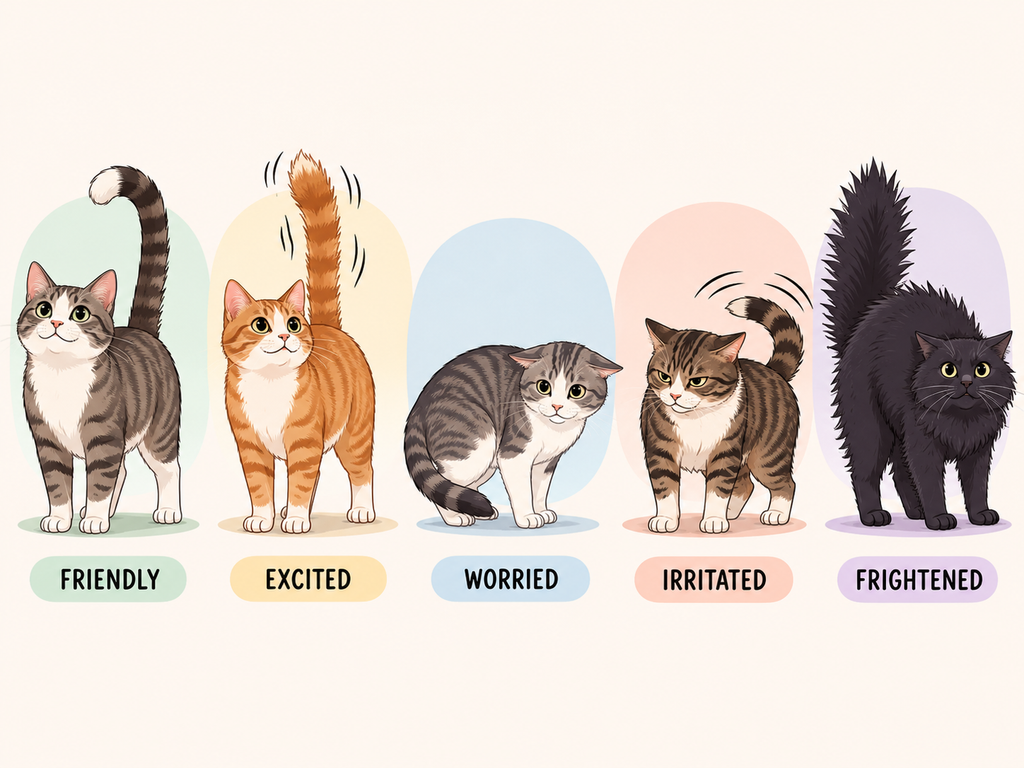
The Tail: Your Cat’s Mood Flag
- Tail up, slight hook at the tip: friendly, confident, “hello”
- Tail up with a quiver: excited greeting, often right before or after marking behavior
- Tail low or tucked: worried, unsure
- Tail flicking or thumping: irritated, overstimulated — stop petting now
- Puffed tail: frightened, trying to look bigger
One rule of thumb: the higher and looser the tail, the better the mood. The faster the flick, the closer you are to “leave me alone.”
The Ears: Radar Dishes That Never Lie
Ears forward and relaxed: all good. Ears rotated sideways (“airplane ears”): annoyed or anxious. Ears flattened back: scared or defensive — give space immediately. Because ears move in seconds, they’re often the earliest honest signal in the room.
The Eyes: Slow Blinks, Stares, and Wide Pupils
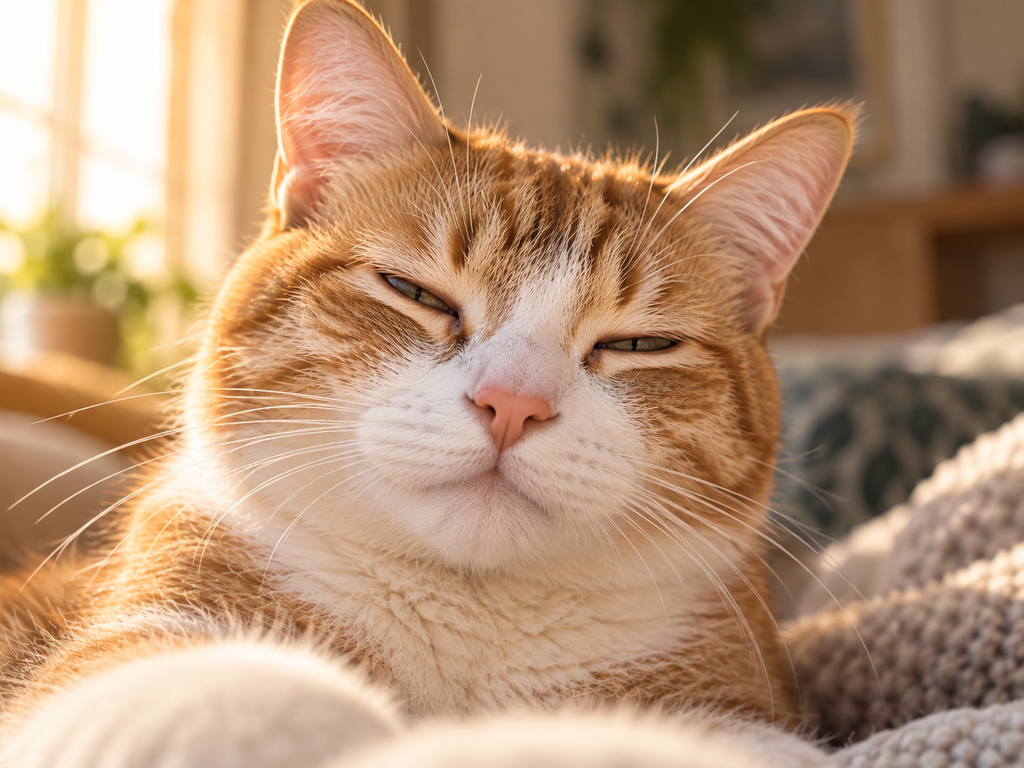
A direct, unblinking stare is a threat in cat language. A slow blink is the opposite — a trust signal so strong you can return it. Try it: look at your cat, soften your eyes, blink slowly, then look slightly away. Many cats blink back. That’s a real conversation.
Dilated pupils can mean play excitement or fear — context decides. Constricted pupils in bright light are normal; in dim light with a tense body, they can signal defensive stress.
Posture: The Loaf, the Flop, and the Arch
- The loaf (paws tucked, tail wrapped): relaxed but ready. Comfortable, not fully asleep.
- Side flop with belly exposed: big trust. But careful — cat showing belly explains why a belly display is usually not an invitation to rub the belly. For many cats it’s a defensive-ready posture or pure comfort, and hands get bitten.
- Arched back with puffed fur: classic fear display, trying to look bigger.
- Crouched, low, ears flat: defensive, “do not touch me.”
The Scent World: Why Your Cat Rubs, Scratches, and Kneads
Cats live in a scent dimension we can barely smell. To your cat, home is a map of smells — and you’re part of the map.
Head Bunting: The Compliment
When your cat bumps their head against your forehead, cheek, or hand, they’re depositing scent from glands on their head and mixing their smell with yours. In cat terms: you’re family, you’re mine, you’re safe. It’s one of the clearest affection signals a cat has.
Cheek and Chin Rubs: Furniture Tagging
Same idea, different surface. Cheek-rubbing door frames, table corners, and your shins marks territory with familiar, calming scent. A home that smells like “us” is a secure home. That’s why changes — new furniture, a new pet, heavy cleaning products — can stress a cat: the scent map got erased.
Scratching: Not Spite, Just Business
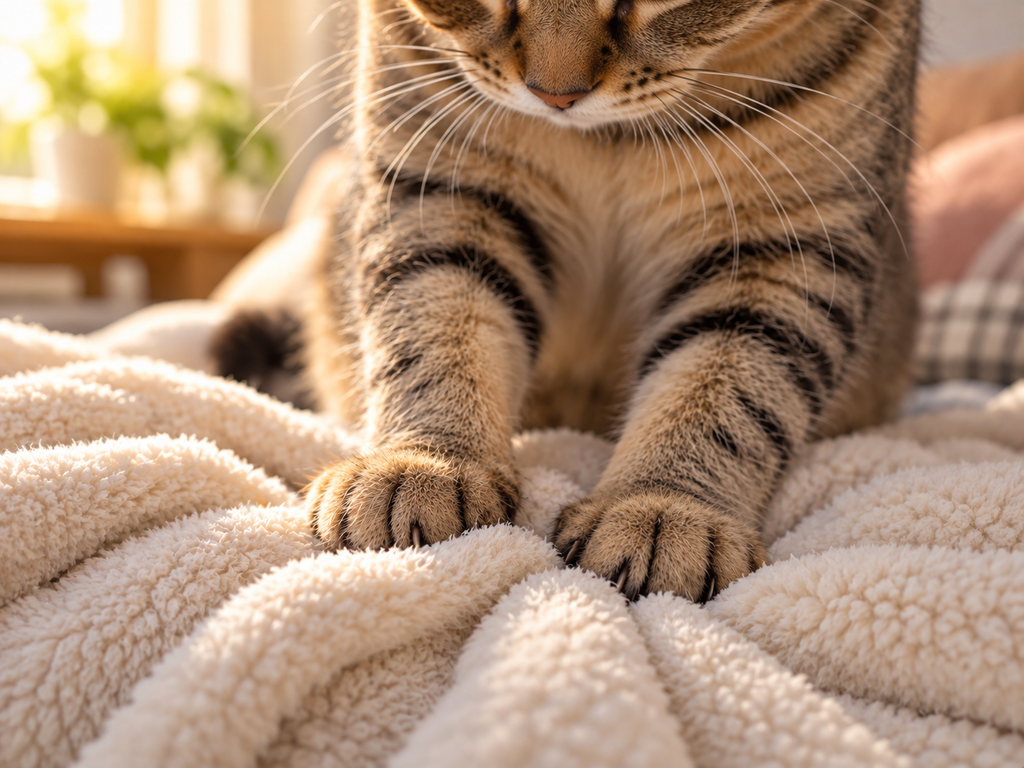
Scratching does four jobs: claw maintenance, stretching, visual marks (visible scratches), and scent marks (glands in the paws). A cat scratching your sofa isn’t mad at you. They’re doing normal cat administration on the most prominent billboard in the house. The fix isn’t punishment — it’s better targets: tall, stable scratchers placed near their favorite spots and near where they wake up.
Kneading: The Kitten Reflex That Never Retires
“Making biscuits” comes from nursing: kittens knead to stimulate milk flow. Adult cats knead when deeply content — it’s a comfort reflex from the safest time of their life. If your cat kneads your lap, you’re associated with total safety. (Yes, even with the claws. A blanket barrier is allowed.)
Everyday Habits, Decoded
Now the daily comedy reel — the behaviors owners ask about most.
The 3 A.M. Zoomies
Cats are crepuscular: wired for dawn and dusk. In a wild-ish schedule, that’s hunt time. In your apartment, the hunt has nowhere to go, so it erupts at 3 a.m. as hallway sprints. It’s normal. You can reduce it with a solid play session (real hunting play: wand toys, chase, pounce) followed by food in the evening. Play → eat → groom → sleep is the natural cycle.
Occasional zoomies: normal. Constant, frantic, distressed-looking running, or yowling during it: worth a vet check, especially in older cats.
Boxes, Sinks, and Bags: The Enclosed Space Obsession
Enclosed spaces equal safety for a predator-prey animal: walls block surprise approaches, and small spaces hold body heat. Research on shelter cats has also shown that access to hiding boxes lowers stress scores. So the box isn’t a joke. It’s self-made therapy. If your cat lacks hiding spots, add some. A cat with good hiding options is a more confident cat.
Knocking Things Off Tables
Three possible drivers: hunting instinct (moving object = prey test), attention learning (object falls, human reacts instantly — very rewarding), and plain understimulation. The honest fix: more play, more foraging puzzles, and less dramatic human reaction when the pen dies.
Following You—Then Ignoring You
Cats aren’t as solitary as their reputation. Many cats do “social roaming”: they want to be near you, not on you. Following you to the kitchen and then sitting a meter away to groom is companionship on cat terms. It’s the feline version of hanging out in the same room as a friend.
Sleeping on Your Keyboard, Laundry, and Face
Warmth explains the laptop and fresh laundry. Your scent plus your attention explains the pillow and face zone. And sitting on your stuff gets an instant reaction from you, which reinforces it. If you want them off the keyboard, the trade has to be worth it: a warm blanket nearby, plus attention when they use it instead.
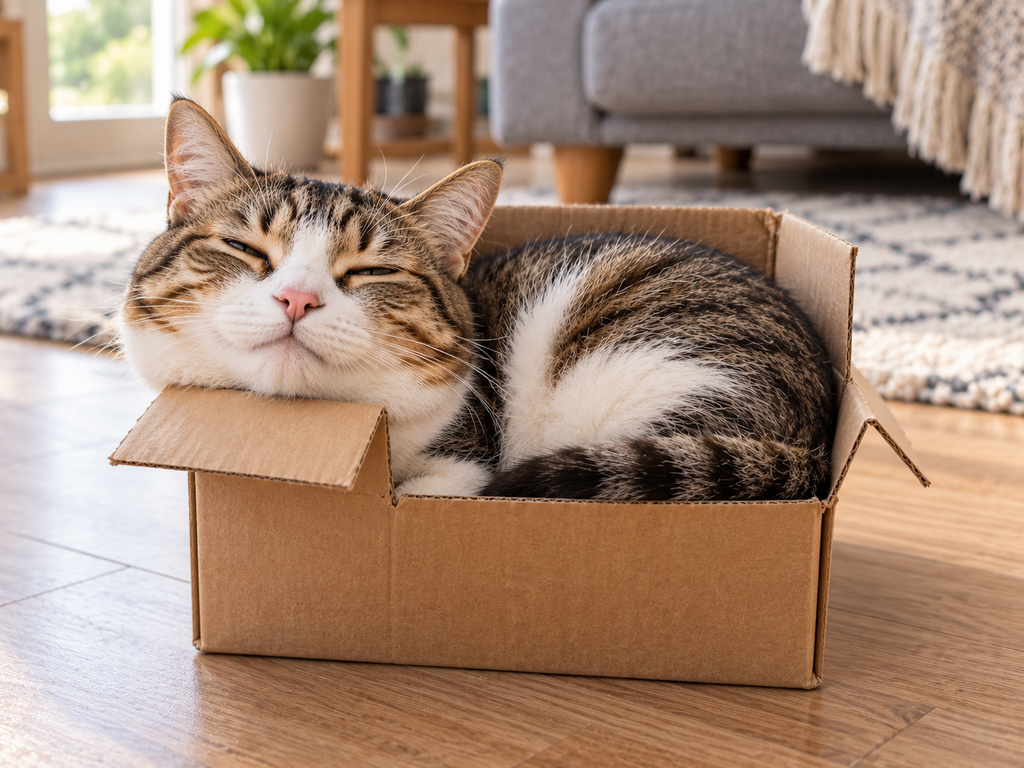
The Sleep Schedule: Why So Much, and Why at the Wrong Times
Cats sleep roughly 12–16 hours a day (kittens and seniors more). But “sleep” here includes a lot of light dozing — ears rotating at every fridge sound. True deep sleep comes in short bursts.
This pattern is energy budgeting for hunting. And since hunting slots are dawn and dusk, your cat’s internal alarm rings when yours doesn’t. You can shift it a little: intense play before your bedtime, a meal after play, and no rewarding of 4 a.m. demands (any reaction is a reward). Consistency over weeks matters more than any single night.
The Litter Box: Your Cat’s Behavior Report Card
The litter box is where behavior and health meet, and cats are brutally honest about it.
Happy box habits: digging, covering (usually), entering and exiting without drama.
Warning signs: going next to the box, crying in the box, straining, frequent trips, blood-tinged urine, or suddenly preferring another surface.
Common non-medical drivers of box avoidance: a dirty box (scoop daily), too few boxes (rule of thumb: one per cat plus one), a bad location (noisy, ambush-prone, next to loud appliances), scented litter, a covered box trapping smell, or inter-cat tension blocking the route.
But always rule out medical causes first. Urinary issues in cats can escalate fast, and a cat straining in or out of the box with little output is an emergency — especially male cats.
Stress Signals: When “Normal” Behavior Isn’t
Because cats hide weakness, stress shows up as changes in routine, not drama. Watch for:
- Hiding more than usual, or in new spots
- Overgrooming to bald patches
- Appetite drops or sudden pickiness
- Litter habits changing
- Less greeting, less bunting, less play
- More irritability: tail thumping, hissing, swatting
- Sleeping even more than their usual ridiculous amount
One weird day: fine. A pattern lasting more than a day or two, or any sudden dramatic change: vet first, behavior second. Pain and disease mimic “behavior problems” constantly in cats, and the kindest move is to rule them out before training anything.
⚠️ Disclaimer: This article is educational, not veterinary advice. Sudden behavior changes, straining in the litter box, hiding with appetite loss, or repeated yowling deserve a prompt vet visit.
How to Speak “Cat” Back
Decoding is half the job. The other half is answering in a language your cat understands:
- Blink slowly. It’s the cheapest gift in cat communication.
- Let them approach. Offer a finger at nose height and let them choose. Consent-based petting builds trust fast.
- Pet the head zones. Cheeks, chin, base of ears — most cats prefer these over belly and tail base.
- Play like a hunter. Daily wand sessions with a real “catch” at the end matter more than duration.
- Keep the map stable. Same feeding spots, same box locations, familiar scents. Change slowly when you must.
- Respect the no. Tail flick, ear turn, skin twitch, walking away — stop immediately. Cats trust humans who listen to small signals, because then they never need the big ones.
Cat Behavior FAQ
Why does my cat stare at me?
Slow blinks and a relaxed posture = affectionate monitoring. A fixed stare with a tense body = something’s up (often a demand or a perceived threat). Staring at a wall or “nothing” is usually just superior senses picking up light or movement you missed.
Is my cat lonely when I’m at work?
Cats are socially flexible. Many do fine alone with a good routine, but they benefit from vertical space, window perches, puzzle feeders, and a real play session when you’re home. Some cats (especially bonded pairs) do better with company.
Why does my cat bite me when I pet him?
Usually overstimulation. The signals come first: tail flick, skin ripple, ears rotating back, pupils dilating. Pet in shorter sessions, stop at the first signal, and the “petting-induced bite” usually fades.
Do cats get jealous?
Cats react to changes in attention and routine. What looks like jealousy is often resource concern: attention, food, and territory are resources. Structured one-on-one time usually settles it.
Why does my cat bring me dead toys (or worse, prey)?
Most behaviorists read this as normal predatory behavior sharing — kittens learn hunting from their mothers, and your cat may be “teaching” you, or simply bringing prey to a safe place: home, where you are. It’s not morbid. It’s family.
Can I train a cat?
Yes, with the same rules as any animal: reward what you want, redirect what you don’t, keep sessions short. Clicker training works beautifully on cats — often faster than owners expect, because food-motivated cats take the job seriously.
Final Thoughts: The Decoder Is Really a Relationship Tool
Here’s what nobody tells you before you learn cat body language: it doesn’t just make your cat easier to live with. It makes your cat more interesting.
The 3 a.m. sprint becomes a missed hunting outlet you can fix. The head bunt becomes a compliment you can feel. The slow blink becomes a tiny daily ritual of trust. You stop guessing and start conversing — in a quiet, tail-flicking, ear-rotating language that was right in front of you all along.
Your cat has been talking to you every day. Now you can talk back.